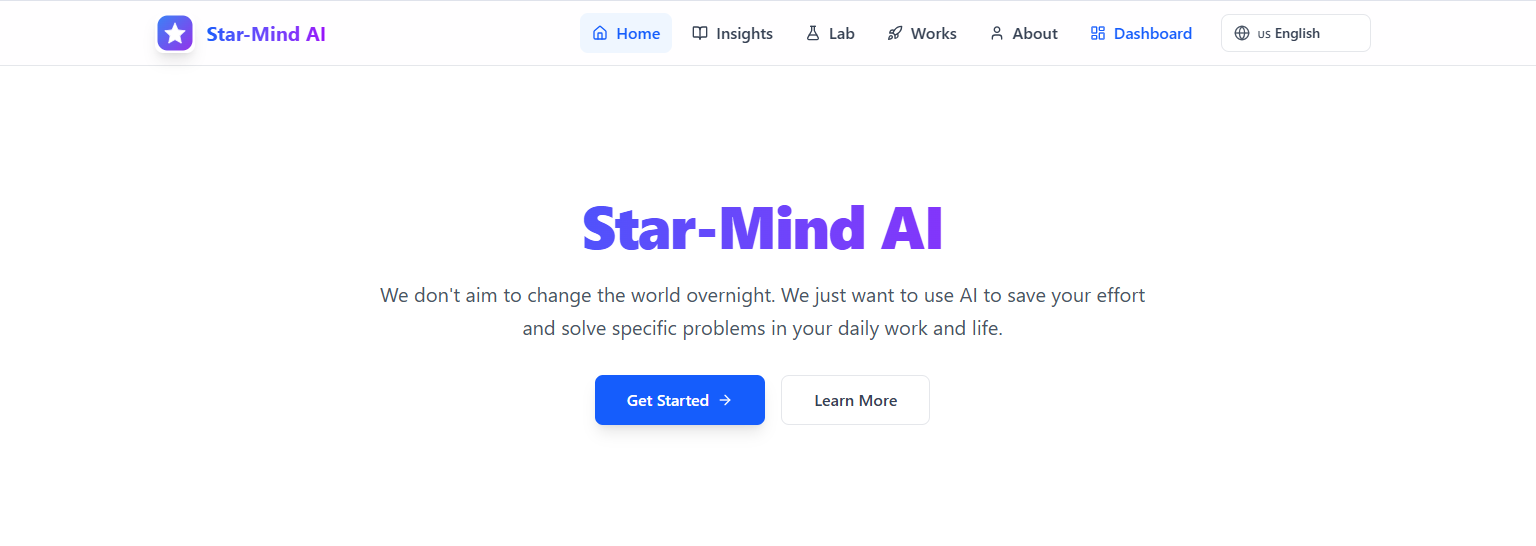
So, here's my dirty little secret: the whole "Star-Mind AI" universe—the teacher tools, the gift finder, this website—is mostly just… me. One guy, a lot of coffee, and a browser with too many tabs open.

When people figure this out, the first question is always: "How? Don't you burn out?"
The short answer is: I absolutely would, if I tried to do it the "heroic" way. You know, the all-night coding sprints, playing part-time sysadmin, and trying to be a marketing genius all at once. That's a recipe for quick failure.
The real trick I've learned isn't about coding faster. It's about building a system that does the heavy lifting for me. It's about being lazy in the smartest way possible. My "stack" isn't just a list of tech—it's my co-founder, my assistant, and my safety net.
Let me walk you through my not-so-secret weapons.
My Golden Rule: Don't Reinvent the Wheel (Seriously, Just Don't)
My philosophy is simple: if a service can host it, manage it, or automate it for a reasonable price (or better yet, free), I let it. My job is to solve my user's problems, not to set up flawless database replication at 2 AM.
I judge every tool by three things:
- Does it save me more time than it costs? (Vercel's
git push deploy? Yes!)
- Does it keep me focused? (Trying to use one backend for everything? No!)
- Can I afford it if this project makes $0? (Generous free tiers are my best friends.)
My Daily Toolkit: The Actual Tech
Alright, let's get concrete. Here’s what's actually running my projects right now.
1. The Foundation: Next.js & My Box of Lego Blocks
I build almost everything with Next.js. Why? Because it's like a Swiss Army knife. Need a page? Done. Need a server API endpoint for a quick feature? It's right there. For my weird setup where I need some data in China and some globally, it's perfect—it can talk to all my different backends without breaking a sweat.
The biggest time-saver? I build everything like Lego blocks. A button, a form, a card—once I build it well, I reuse it everywhere. The UI for my "AI Comment Master" and my little "Lab" tools share the same parts. This consistency saves me weeks of design and tweaking.
2. The "Where It Lives" Setup: Playing to Strengths
I don't use one server for everything. I match the tool to the job:
- The Main Site & Global Stuff (like GiftWise): Lives on Vercel. I connect my GitHub repo, and it just… deploys. Global CDN included. It's magic for reaching users everywhere fast.
- The China-Facing Tools (like "AI Comment Master"): This runs on a FastAPI backend inside China, hooked to a local cloud database. Why? Speed and rules. It just works better for that audience.
- Where I Keep Things (Images, Files): I use Cloudflare R2 (huge fan of no bandwidth fees) for the world, and Qiniu for stuff in China. A bit of smart code directs users to the closest place automatically.
3. The Boring (But Life-Saving) Auto-Pilot Stuff
This is the real secret sauce. I automate everything I can so I can forget about it.
- Deployments: When I push code to the
main branch, it automatically tests, builds, and deploys. I don't even think about it.
- Tracking & Decisions: I don't guess what users like. My "Lab" tools have little trackers to see if anyone uses them. For my paid tools, I watch simple metrics. Is this feature popular? The data tells me, so I know where to spend my time next.
- Backups & Setup: My database structure is in script files. If I need to set everything up from zero, I can run a script and be 80% done. No remembering "how did I configure that thing last year?"
How I Actually Structure My Weeks (The Anti-Burnout Plan)
The best tools fail if your schedule is chaos. Here’s my attempt at order:
- Theme My Days: I try to batch similar tasks. Maybe Monday is for writing (like this post!), Tuesday is deep technical work on one product, Wednesday is for emails and outreach. This stops the constant, brain-frying context-switching.
- The "Lab" is My Playground: This is crucial. New ideas start in my "Lab" as tiny, rough prototypes. If people play with them, they get more love. If they flop, I kill them without guilt. It lets me experiment without betting the whole farm on a wild idea.
- Ship the Ugly Baby First: The first version of everything I make is kind of embarrassing. It's barely functional. But I get it out there to a few real people immediately. Their feedback is worth 100x more than me polishing it alone for another month.
- Protect the Deep Work Zone: I block 3-4 hour chunks on my calendar for coding. During this, notifications are off. This is non-negotiable. It's the only way I get real, complex problems solved.
The Real Takeaway
Being a solo developer isn't about being the fastest coder. It's about being a great orchestrator. You're bringing together the best services, automating the routine, and fiercely guarding your time and focus.
The goal is to build a system that works for you, so you can spend your energy on what matters: solving a real problem for someone else. Whether that's helping a teacher save an afternoon or helping someone find a thoughtful gift.
It’s a marathon. Build a stack that lets you enjoy the run.
P.S. What's one tool or habit that saves YOUR sanity as a builder? Hit reply—I'd love to hear. And if you're curious, you can see this stack in action on my Lab page or check out AI Comment Master to see how it all comes together for a real product.
.png?e=1768397483&token=obZul7mVIk2yk3OcNMp3TSSHh8WM0a0iibOyrdPd:6KQ5Gc31_w_e8X3sF4GYzJCz8bo=)